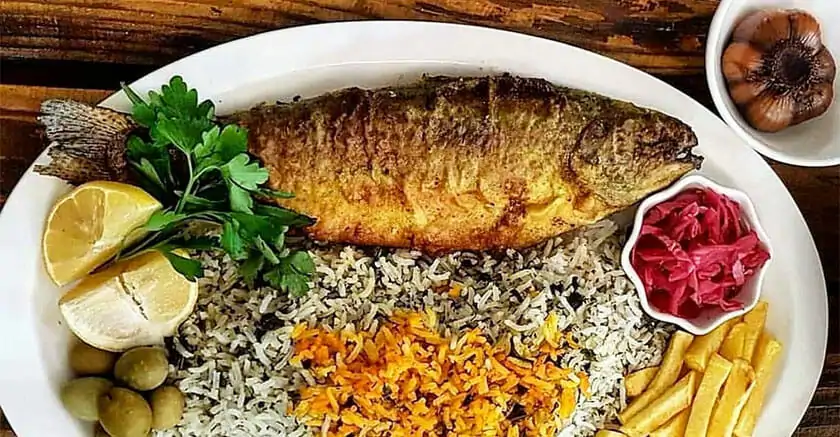
Sabzi Polo Ba Mahi is the final meal traditionally served on the night before Nowruz, the Persian New Year.
Its symbols are simple and enduring:
herbs for renewal, fish for movement, and rice for abundance.
This page offers a clear, historically understandable guide to the recipe and the meaning behind it.
Ingredients for Sabzi Polo (Herbed Rice)
- 2 cups basmati rice
- 1 cup mixed fresh herbs: parsley, dill, cilantro, and chives (finely chopped)
- 3 tablespoons vegetable oil or butter
- 1 teaspoon turmeric
- Salt, as needed
- 2–3 tablespoons saffron water (optional)
Ingredients for Mahi (Fish)
- 2 large fillets of white fish (trout, cod, tilapia, or similar)
- 2 tablespoons flour
- 1 teaspoon turmeric
- Salt and pepper, to taste
- 4 tablespoons oil for frying
- Lemon wedges, for serving
How to Prepare the Dish
Preparing the Rice
- Rinse the basmati rice under cold water until clear.
- Soak it for 30 minutes in lightly salted water.
- Bring water to a boil and par-cook the rice for 6–8 minutes until firm.
- Drain and rinse briefly with cold water.
- Heat 2 tablespoons of oil or butter in a large non-stick pot.
- Layer the rice and herbs in alternating layers, ending with rice.
- Add turmeric and saffron water, if used.
- Cover the pot with a clean towel and lid. Steam on low heat for 30–40 minutes until fluffy.
Preparing the Fish
- Pat the fillets dry.
- Season them with turmeric, salt, and pepper.
- Lightly coat both sides with flour.
- Heat oil in a skillet over medium heat.
- Fry each side for 3–4 minutes, until golden and crisp.
Serving
Place the fragrant herbed rice on a large dish, add the crispy fried fish, and garnish with lemon wedges or extra herbs.
Serve warm as the final meal before Nowruz.
Cultural Meaning and Tradition
For generations, Sabzi Polo Ba Mahi has marked the transition between the old year and the new:
- Herbs symbolize the arrival of spring and the renewal of life.
- Fish represents movement, growth, and prosperity in the coming year.
- Rice, a staple of Persian cuisine, symbolizes blessing and continuity.
This dish functions as both nourishment and ritual—an edible expression of hope, renewal, and preparation for the year to come.
Ingredient Availability (International Note)
Outside Iran, the dish is easy to prepare:
- Fresh herbs → Persian, Afghan, Turkish, Middle Eastern, and South Asian markets
- Fish → trout, cod, haddock, or similar options from any supermarket
- Saffron → specialty shops or online suppliers
This accessibility has allowed the dish to spread across Iranian communities worldwide.
Frequently Asked Questions (FAQ)
What fish is closest to the traditional Iranian version?
Caspian white fish is traditional. Trout or cod are the best substitutes outside Iran.
Can the dish be made without saffron?
Yes. Saffron adds aroma and color, but the dish remains authentic without it.
Why is this meal eaten specifically before Nowruz?
It symbolizes renewal and provides a final meal before entering the New Year with fresh purpose.
Can dried herbs replace fresh herbs?
Use fresh herbs when possible. If using dried herbs, reduce the quantity because they are more concentrated.
Is Sabzi Polo Ba Mahi only eaten for Nowruz?
It is most famous for Nowruz Eve but is enjoyed throughout the year.
Summary
Sabzi Polo Ba Mahi remains one of the most recognizable and meaningful dishes in Persian culture.
Its symbols—growth, movement, and prosperity—carry forward across generations.
As the last food eaten before Nowruz, it welcomes the New Year with clarity, hope, and renewal.
Comments